White Fillings for Kids
Finding out your child has a cavity can feel like a failure. It isn't. Cavities are the most common chronic condition of childhood — more common than asthma — and they happen in families who brush, floss, and do everything right.
What matters now is fixing it comfortably, and keeping the next one from forming. White fillings let us do the first part in a way most kids barely notice.
Why we use them for children
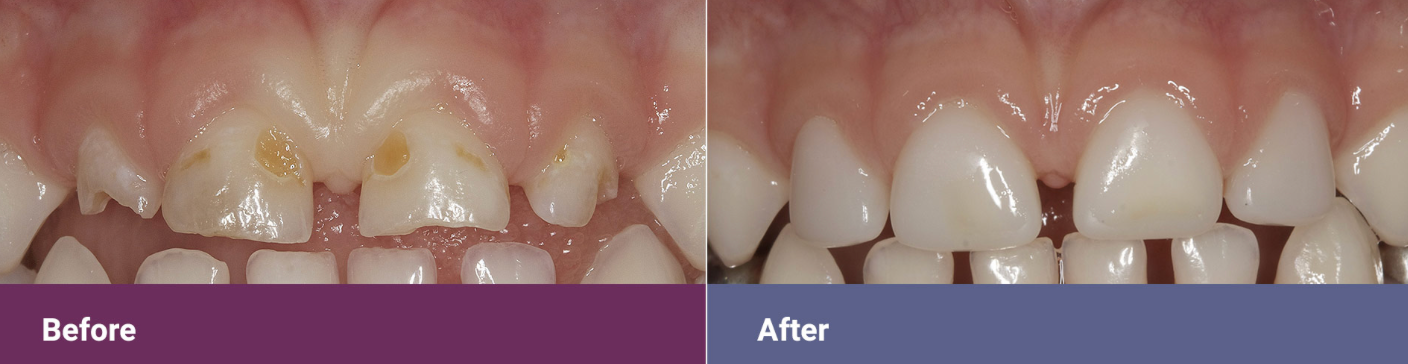
They look like teeth. Kids notice metal in their mouths, and other kids notice it too. That matters more to a seven-year-old than adults tend to remember.
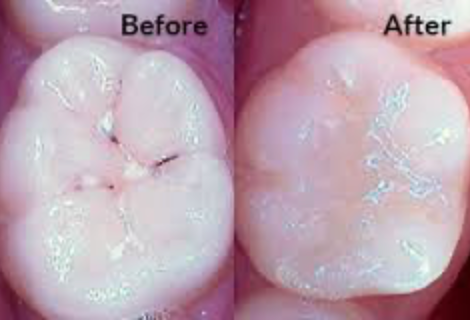
They bond to the tooth. Composite adheres directly to tooth structure, so we can often remove less healthy tooth to place one. On a small tooth with a small cavity, conserving structure counts.
No mercury. White fillings contain no amalgam and no mercury. Parents ask this often, and it's a fair question.
They set immediately. We cure the material with a light, so it's fully hard before your child leaves the chair.
They're gentler with temperature. Composite doesn't conduct hot and cold the way metal does, so there's often less sensitivity afterward.
What the appointment is like
We tell kids what's happening in words that don't frighten them, and we never spring anything on them.
We get the tooth comfortable first. We use a numbing gel on the gum before anything else, so most children don't feel what comes next. We explain each step in kid-friendly language as we go.
We clean out the decay. This is the part with the buzzing, and we tell them about it beforehand rather than letting it be a surprise. Many children do well with nitrous oxide here to take the edge off.
We place and shape the filling. The material goes in soft, gets shaped to match the tooth, and is hardened with a bright blue light — most kids find this part genuinely interesting.
We check the bite and polish everything smooth.
A single filling is usually a short appointment. If your child is anxious, or several teeth need attention, we can talk about nitrous oxide, oral sedation, or IV sedation in our office so it's all completed comfortably in one go.
Afterward
- Watch the numb lip. This is the one that catches families out. Children will chew a numb cheek or lip without feeling a thing, and the sore that follows hurts far more than the filling did. Keep an eye on them until sensation fully returns, usually an hour or two, and skip chewy foods until then.
- They can eat as soon as the numbness wears off. White fillings are fully set before you leave, so there's no waiting on the filling itself.
- Mild cold sensitivity is normal for a few days and settles on its own.
- Call us if the bite feels high, if a tooth stays sensitive beyond a week or so, or if there's pain when biting down. These are quick, easy adjustments and always worth a visit.
How long they last
With good brushing and regular checkups, a white filling in a baby tooth will usually last until that tooth comes out on its own. In permanent teeth they last for years, and we check every filling at each visit.
What shortens a filling's life is the same thing that caused the cavity — frequent sugar, and brushing that misses spots. The filling fixes today's problem; the habits protect tomorrow's teeth.
"Why fix a baby tooth if it's going to fall out anyway?"
We hear this a lot, and it's a completely reasonable question.
Baby teeth stay put longer than most parents expect — some molars until around age twelve. In the meantime they're doing real work: chewing, speech, and holding space for the adult teeth lining up underneath.
Untreated decay doesn't stay still. It grows, it can reach the nerve and cause real pain and infection, and it can damage the permanent tooth forming below. Losing a baby tooth too early can also crowd the adult teeth that follow.
A small filling now is a much smaller thing than what it prevents.
Keeping the next one away
- Brush twice a day with fluoride toothpaste or a tooth paste you prefer, two full minutes
- Floss once teeth touch — that's where most children's cavities start
- Water instead of juice and soda, and sweets with meals rather than between them
- Ask us about sealants for the permanent molars
- Keep up regular checkups so we catch soft spots while they're still reversible
Worried about a tooth?
If you've spotted a dark spot, or your child has mentioned a tooth hurting, don't wait it out. Small cavities are quick, comfortable fixes. Bigger ones aren't.
Call Bloom Pediatric Dentistry in Chandler to schedule: 480-867-7355