Curodont: Treating Early Cavities Without the Drill
What it is
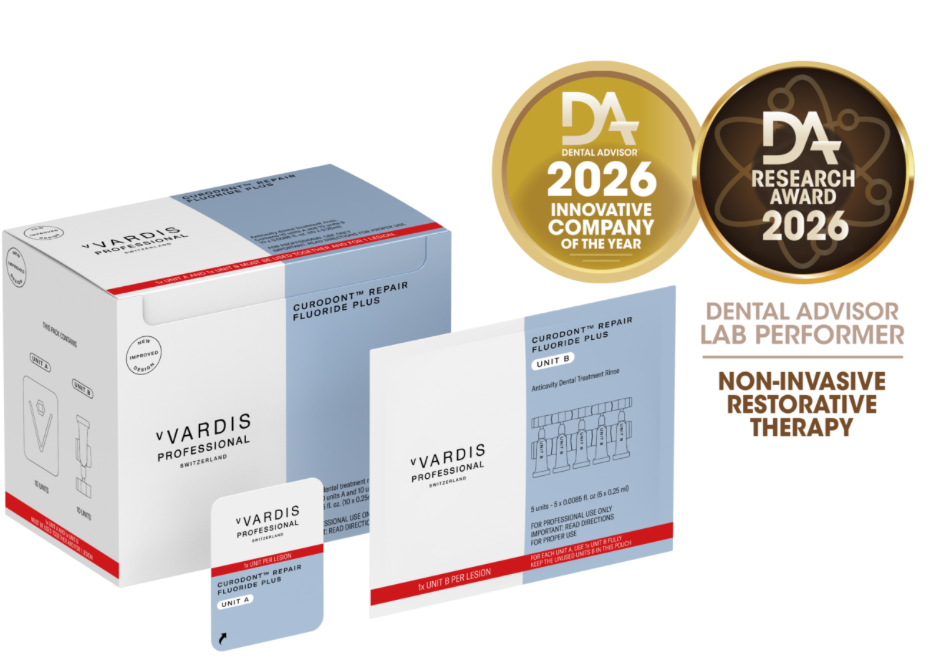
Curodont Repair Fluoride Plus is a clear liquid we apply directly to an early cavity. It contains a specially designed protein fragment called a self-assembling peptide, alongside fluoride.
It isn't a filling, and it isn't a coating that sits on top of the tooth. It works underneath the surface, in the part of the tooth that's started to weaken.
How it works
Early decay is stranger than most people expect. Before a cavity becomes a visible hole, the tooth is already losing minerals underneath a still-intact surface layer — a bit like the inside of a wall going soft while the paint looks fine. That's what a white spot usually is.
Here's what Curodont does about it:
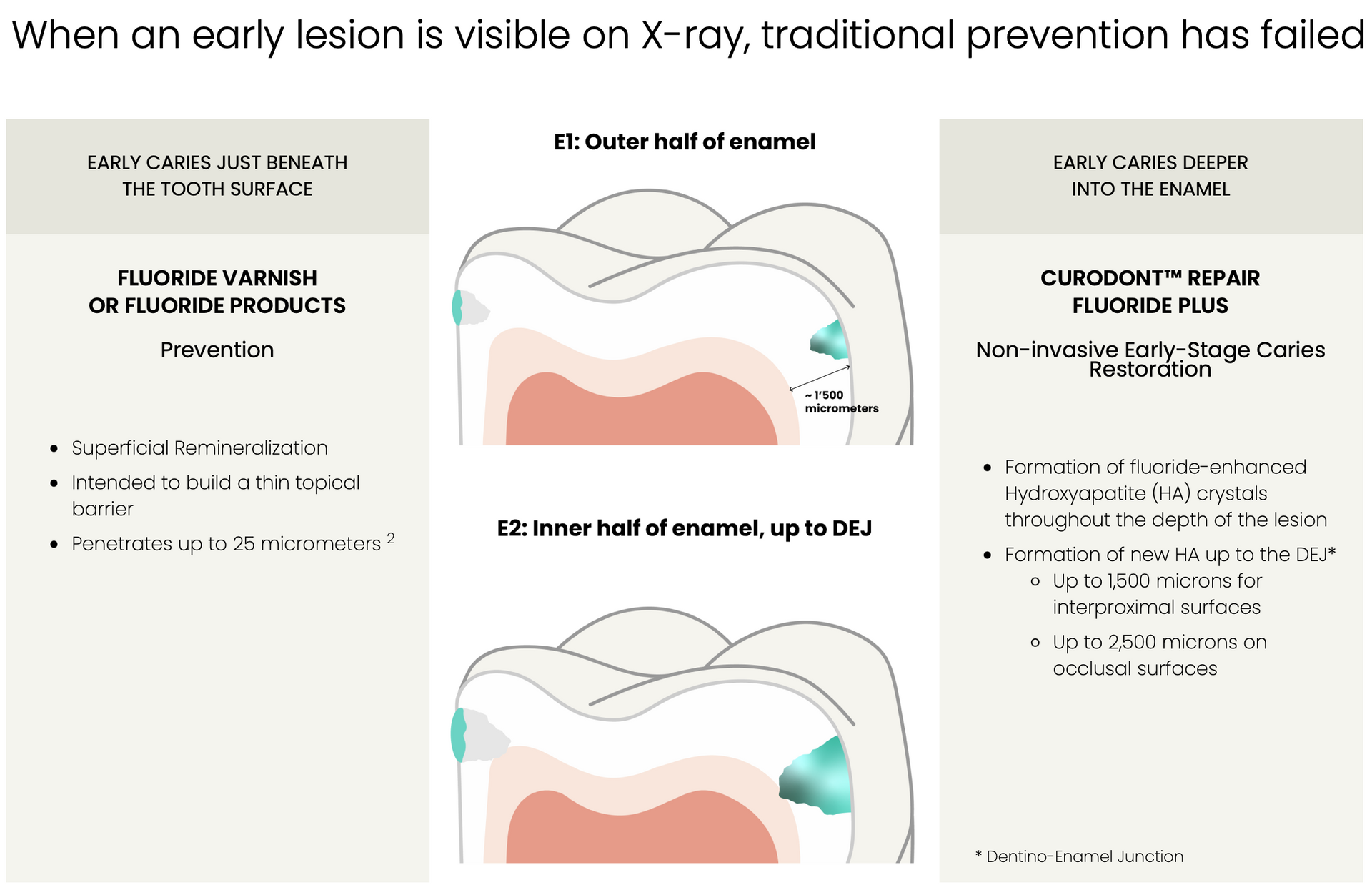
It soaks in. The liquid is thin enough to pass through the intact surface and reach the weakened area beneath — a considerable distance into the tooth, far deeper than a varnish sits.
It builds a scaffold. Once inside, the peptide assembles itself into a fine three-dimensional mesh that fills the porous, damaged space. This is the clever part — the material organizes itself into a structure that resembles the natural framework enamel forms on.
Your child's saliva does the rest. That scaffold attracts the calcium and phosphate already present in saliva, and new mineral crystals grow along it. The fluoride in the formula strengthens the crystals as they form.
The result is that the tooth regains mineral from the inside out, rather than simply being sealed over. Dentists call this guided enamel remineralization; the shorthand version is that we're helping the tooth repair itself.
What the visit is like
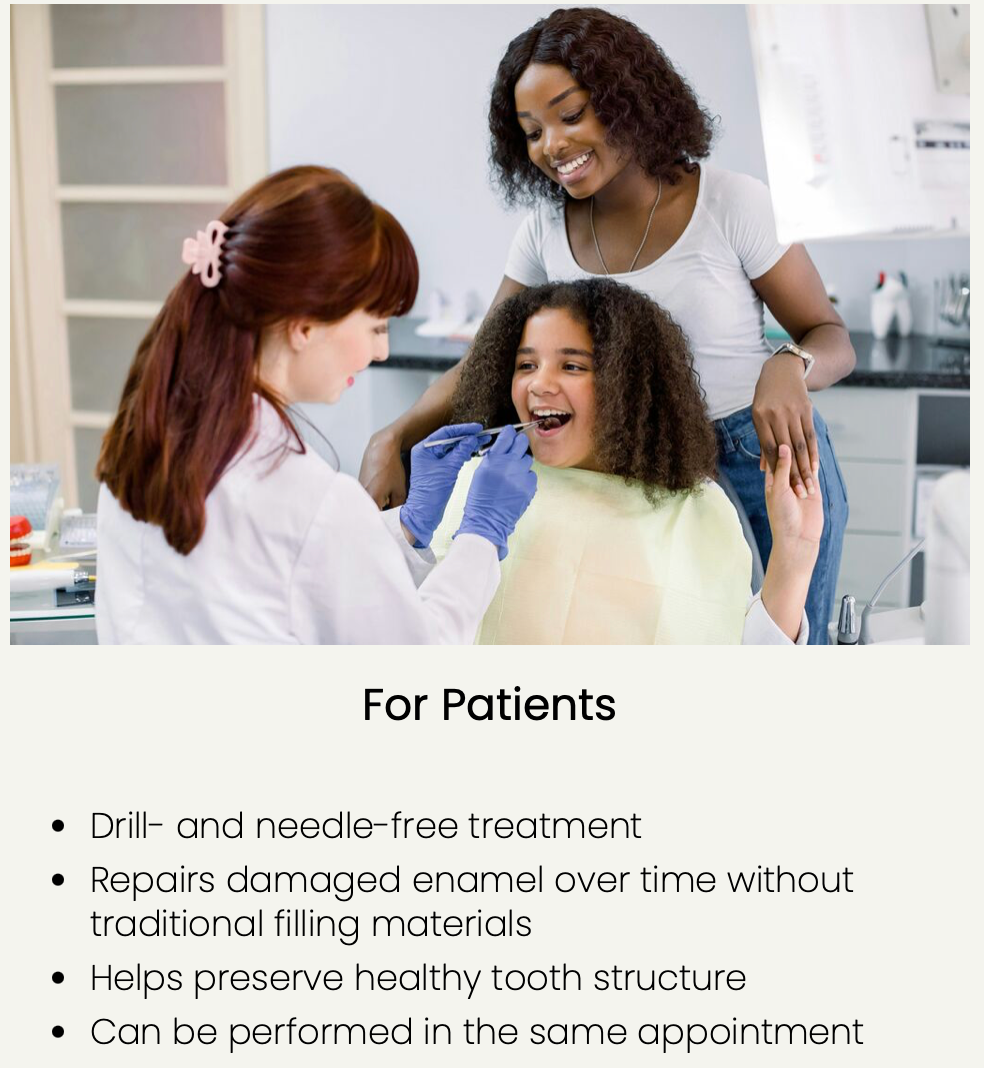
This is the part parents like most. There's no drill, no injection, and nothing to be numb for.
- We clean the tooth with a polishing paste.
- We prepare the surface with a brief conditioning gel, then rinse and dry. This opens the way for the liquid to soak in.
- We apply Curodont with a small saturated sponge held against the tooth for a few seconds.
- That's it. The application itself takes about 1-3 minutes per tooth.
Afterward, your child shouldn't eat, drink, or rinse for 30 minutes while the treatment settles in. That's the only aftercare.
Most children find this an easy appointment — it's quiet, quick, and nothing about it hurts. For a child who's had a hard time in a dental chair before, that matters enormously.
Who it's for
Curodont works on early decay that hasn't broken through into a hole. That includes:
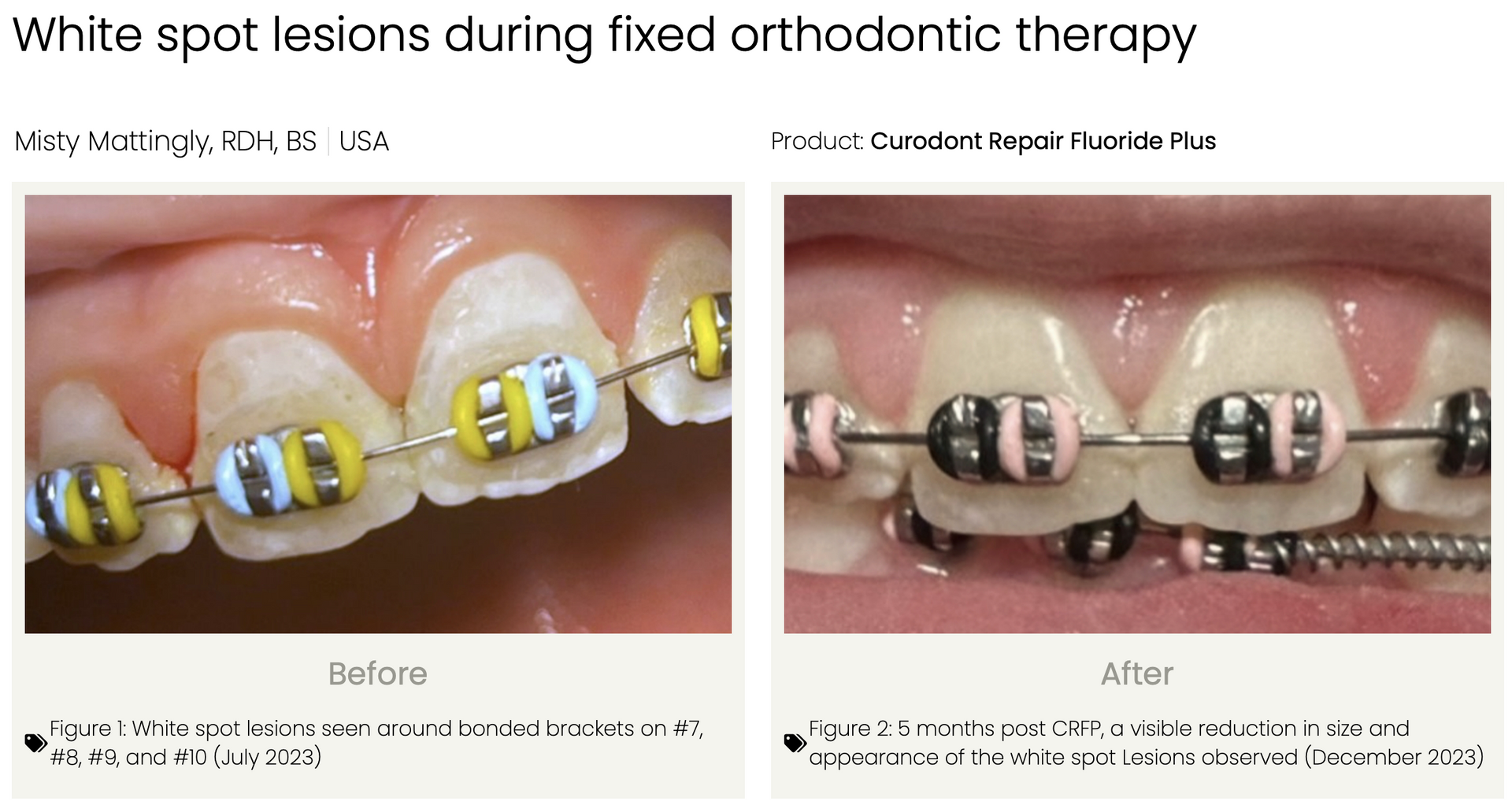
- White spot lesions — chalky white marks, often near the gumline or around braces
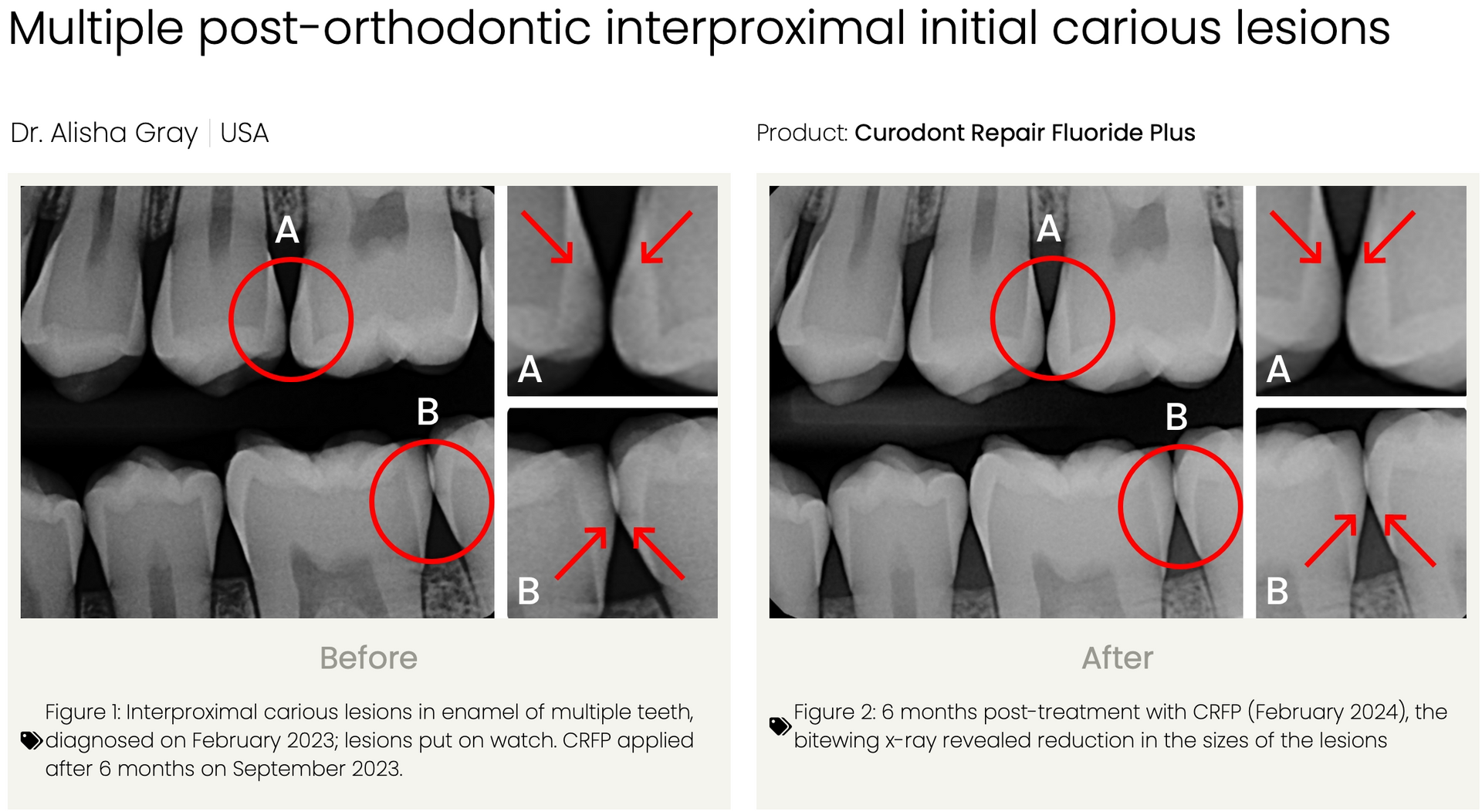
- Early decay we've spotted on an x-ray between teeth, before it's visible
- Soft spots in the grooves of back teeth
- Children at higher risk of cavities, where we want to intervene early
It can't fix a tooth that already has a hole in it. Once decay has broken through the surface, the structure is gone and it needs a filling or a crown — Curodont can't rebuild what isn't there. This is a treatment for catching things early, which is exactly why we check at every visit.
We'll tell you honestly which category your child's tooth falls into.
What the research shows
We'd rather give you the real picture than a sales pitch.
A 2023 review in the Journal of the American Dental Association pooled six clinical trials and found that treated early lesions were substantially more likely to stop progressing than untreated ones, with lesions shrinking by around a third on average.
The honest caveats: the individual studies were small, most had design weaknesses the reviewers flagged, and the trials examined the original Curodont formula rather than the fluoride-containing version used today. Researchers described it as promising and called for longer studies — which is a fair summary of where things stand.
Our view: it's a well-tolerated, non-invasive option with encouraging evidence behind it, and for the right tooth it's a much better first move than drilling. It isn't a miracle, and it doesn't replace brushing, flossing, or regular checkups.
Questions parents ask
Does it hurt?
No. There's no drilling and no injection. Most children don't find any part of it uncomfortable.
How many treatments will my child need?
It depends on the lesion. Some respond to a single application; some benefit from a repeat visit. We'll re-examine the tooth and tell you where things stand.
Will the white spot disappear?
Often it fades noticeably as mineral returns. Whether it vanishes completely varies from tooth to tooth, so we'd rather you expect improvement than perfection.
Is it safe?
It's applied in tiny quantities, stays on the tooth, and is well tolerated. Tell us about any known allergies before treatment, as with anything we use.
Does this mean my child won't need fillings?
Not on its own. Curodont treats decay we catch early. It doesn't prevent new cavities from forming, and it can't repair existing ones — brushing, flossing, diet, and regular visits still do the heavy lifting.
Is it covered by insurance?
Most plans don't currently cover Curodont. Cost will be discussed based on each child’s specific treatment plan and number of teeth needing treatment
Is it right for your child?
If we've spotted early decay, ask us whether Curodont is an option. Catching a tooth at this stage — before it needs drilling — is the best outcome in all of pediatric dentistry, and it's worth a conversation.
Call Bloom Pediatric Dentistry in Chandler: 480-867-7355