

What Are Dental Sealants?
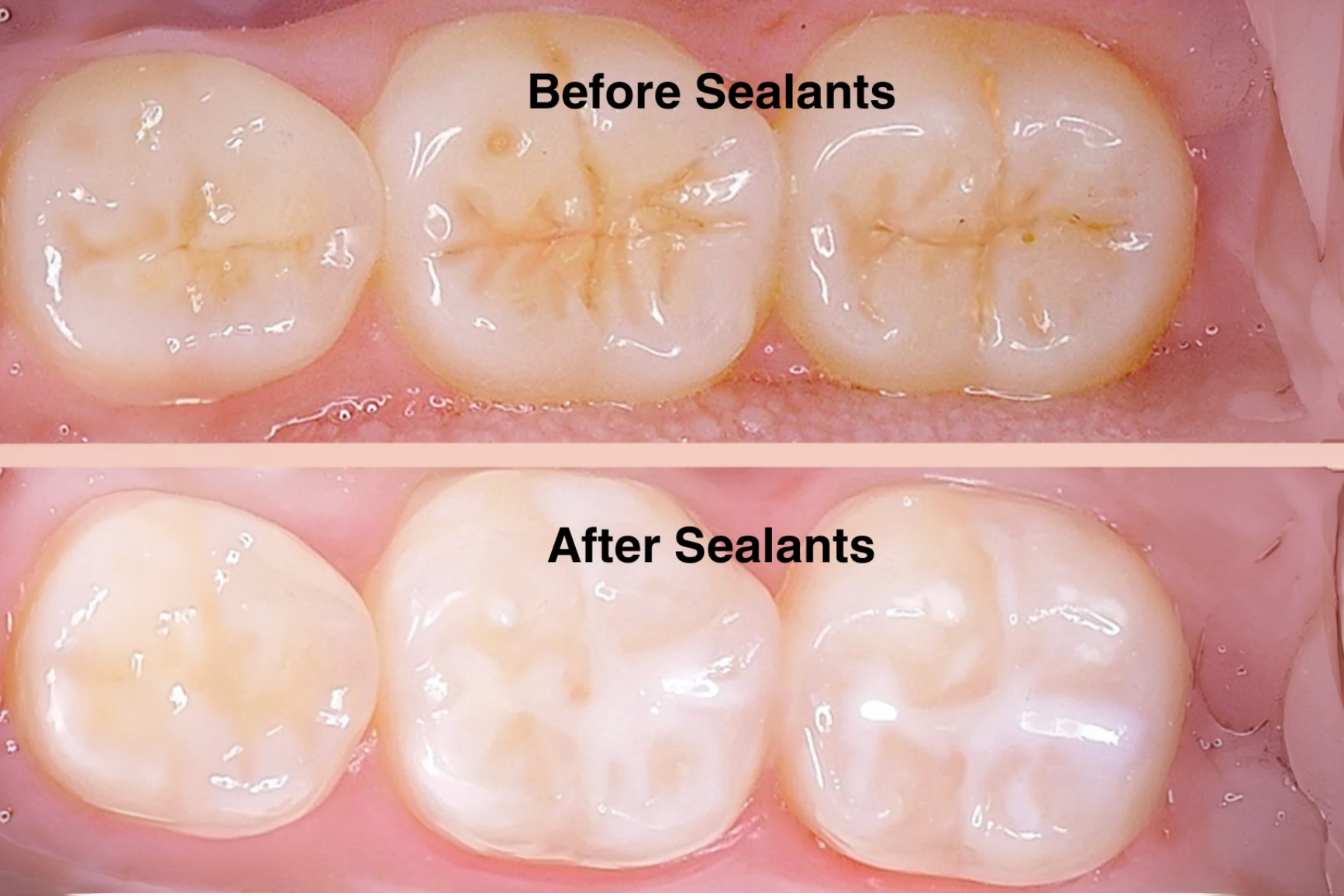
Dental sealants are thin, protective coatings that are applied to the chewing surfaces of the back teeth (molars and premolars). These teeth have deep grooves and pits that can easily trap food particles and plaque, making them more susceptible to cavities. By sealing these grooves, the sealant prevents bacteria and food particles from getting stuck, reducing the risk of tooth decay. Sealants are typically applied to children’s teeth once their permanent molars come in, but adults can also benefit from sealants if they are at high risk of cavities.
Benefits of Dental Sealants
Dental sealants offer several key benefits:
Prevents Cavities: Sealants provide an extra layer of protection on the teeth, reducing the risk of cavities in hard-to-reach areas.
Quick and Painless: Applying dental sealants is a simple, non-invasive procedure that can be completed in just a few minutes.
Long-Lasting Protection: Sealants can last for several years with proper care, offering long-term protection for your teeth.
Cost-Effective: By preventing cavities, sealants can save you money on more extensive dental treatments like fillings or crowns.
Ideal for Children and Teens: Children and teens are often more prone to cavities, making sealants a great preventive measure to keep their teeth healthy.
Who Can Benefit from Dental Sealants?
While dental sealants are most commonly recommended for children and teens, anyone who is at a higher risk for cavities can benefit from them. You may want to consider dental sealants if:
Children: Kids typically get sealants on their first and second molars as soon as these teeth come in (usually around ages 6 and 12). This is when teeth are most vulnerable to cavities.
Teens and Young Adults: Teenagers and young adults who have deep grooves or pits in their molars may also benefit from sealants to protect their teeth from decay.
How Are Dental Sealants Applied?
The process of applying dental sealants is quick, painless, and can be done in a single visit:
- Cleaning the Tooth: First, we will thoroughly clean the tooth to remove any plaque or food particles.
- Preparing the Tooth: The surface of the tooth is then prepared with a special solution that helps the sealant bond to the tooth.
- Applying the Sealant: The liquid sealant is applied to the grooves of the tooth, filling in any deep pits.
- Hardening the Sealant: We use a special curing light to harden the sealant, which forms a protective barrier over the tooth.
Once the sealant has hardened, the tooth is protected from cavities, and you can resume your normal activities immediately.
How Long Do Dental Sealants Last?
Dental sealants can last for several years before they need to be reapplied. With proper care, they provide long-lasting protection for your teeth. During regular dental checkups, we’ll monitor the condition of your sealants and let you know if they need to be touched up or reapplied.
Caring for Your Dental Sealants
Maintaining good oral hygiene is essential to ensuring the longevity of your dental sealants. Here are a few tips for caring for your teeth after getting sealants:
- Brush twice a day with fluoride toothpaste
- Floss daily to remove plaque and food particles from between your teeth
- Avoid hard or sticky foods that could damage the sealants
- Schedule regular dental checkups to monitor the condition of your sealants and ensure they remain effective
Ask us at your next visit
If your child's molars have come in, ask us whether sealants make sense for them. It takes a few minutes, there is no drilling and no numbing, and it can spare a tooth years of trouble.
Call Bloom Pediatric Dentistry in Chandler: 480-867-7355