

Pulpotomy
If we've told you your child needs a pulpotomy, you may have heard it called a "baby root canal" — and that phrase understandably makes parents nervous. It’s far from a root canal - so let’s call it what it does “nerve disinfectant procedure”
Here's the reassuring version: this is a routine treatment we do often, your child will be numb and comfortable throughout, and the goal is to save a tooth that would otherwise have to come out.
What's actually going on inside the tooth
Every tooth has a soft center — the pulp — that holds the nerve and blood supply. It sits protected under the hard outer layers.
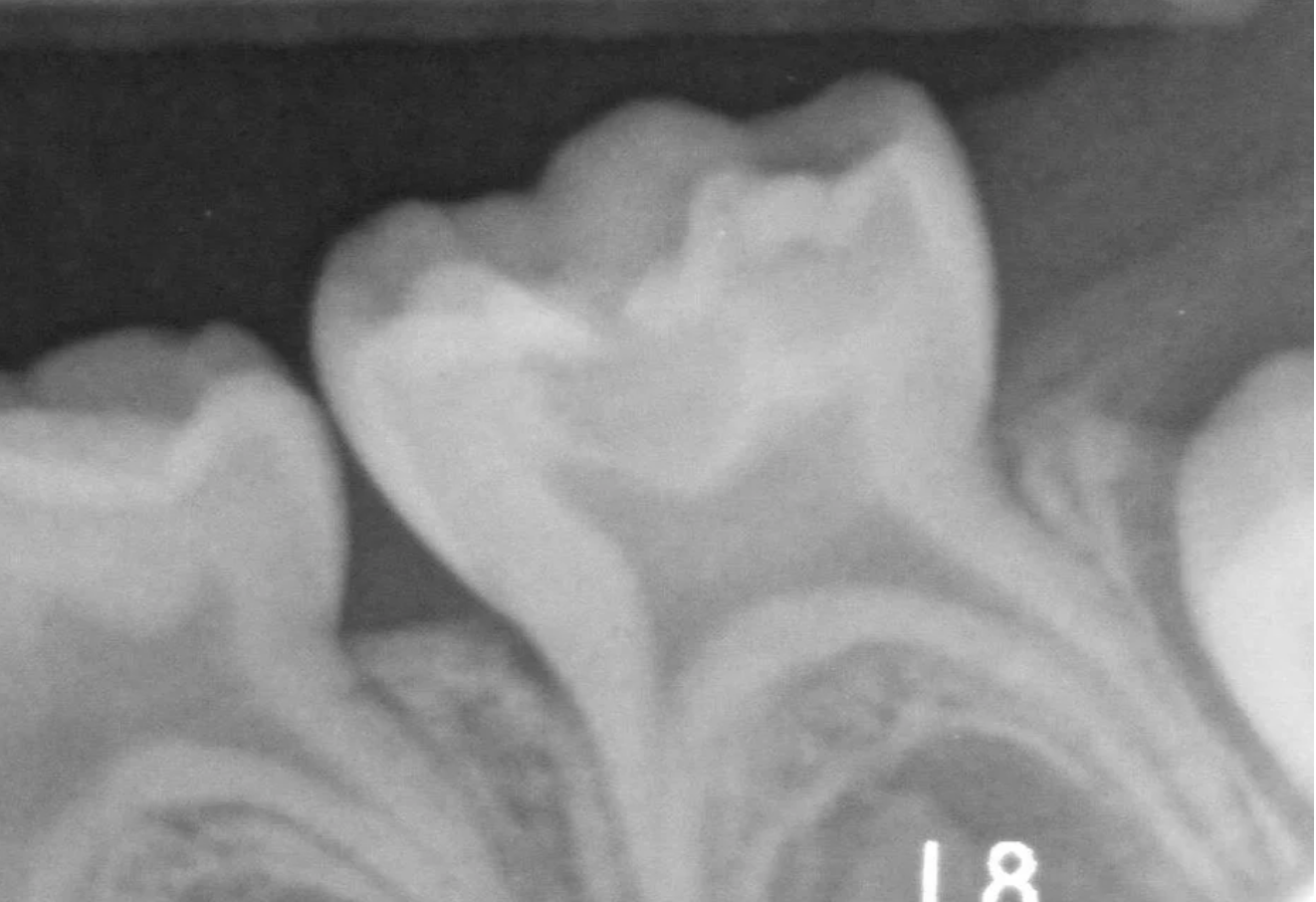
When decay goes deep enough to reach the pulp, or when a fall cracks a tooth badly, that soft tissue gets inflamed or infected. That's what causes a genuine toothache, and left alone it leads to an abscess: swelling, real pain, and infection that can spread.
Pulpotomy is the treatment that deals with it while keeping the tooth in place.
What is a pulpotomy exactly
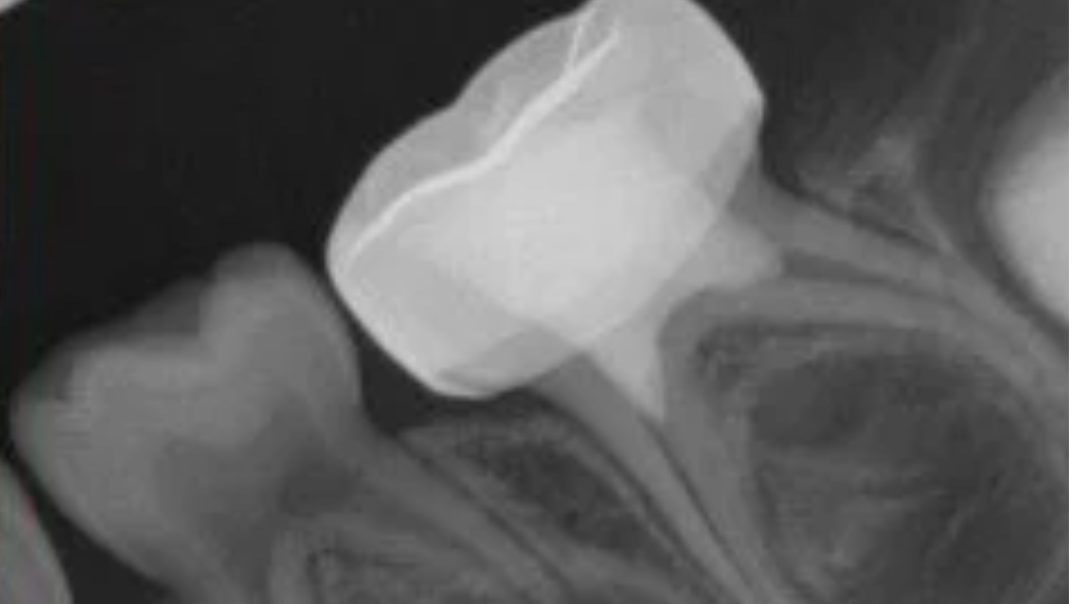
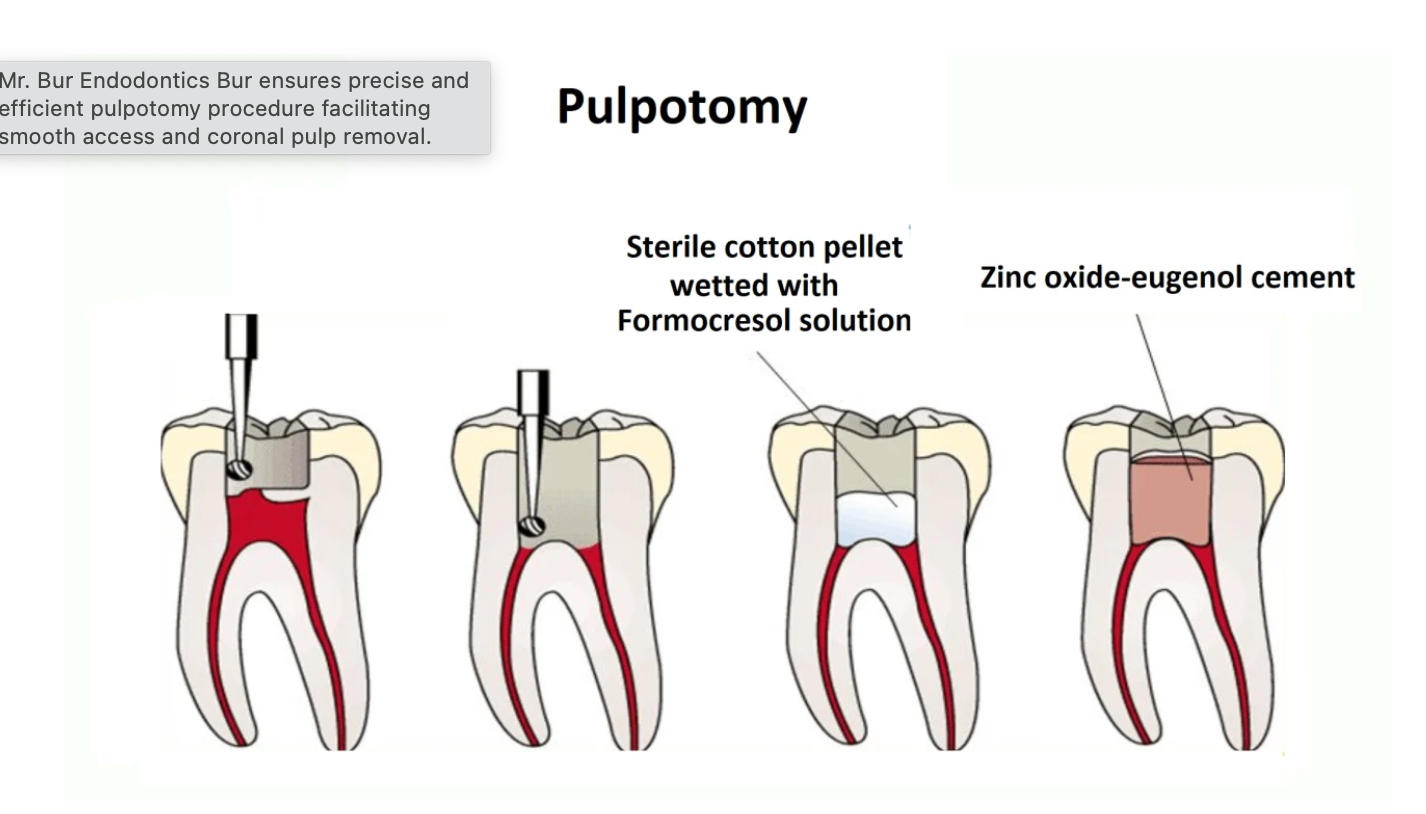
A pulpotomy Only the top portion of the pulp — the part inside the crown of the tooth — is affected. We remove that part, treat what remains with a medicated material to settle it and seal it, and leave the healthy pulp in the roots alone. A crown must be placed after to protect the integrity of the tooth
Why not just pull the tooth?
It's the first question most parents ask, and it's a fair one. Extraction is faster and usually cheaper.
The problem is what a missing baby tooth does to everything around it. Baby teeth hold space for the permanent teeth developing underneath. Remove one too early and the neighboring teeth drift into the gap — so when the adult tooth finally arrives, there isn't room for it. That means crowding, and often orthodontic treatment later that could have been avoided.
Baby teeth also do daily work: chewing properly, forming speech sounds, and for front teeth, how a child feels about their own smile.
So when a tooth can be saved, we save it. Sometimes it can't — if the infection is too advanced or too much structure is gone — and we'll tell you plainly if that's the case rather than attempting something unlikely to hold.
Signs your child may need this
- Toothache, particularly one that wakes them at night or comes on without eating
- Lingering sensitivity to hot or cold, rather than a quick twinge
- Swelling of the gum or face, or a pimple-like bump on the gum
- A tooth that has darkened or changed color
- Pain when biting on one particular tooth
- A tooth broken by a fall, especially with pink or red showing at the break
Facial swelling means call us the same day. That's an infection that needs attention promptly, not at the next available appointment.
Deep decay can also reach the pulp with no symptoms at all, which is one of the reasons we take x-rays at checkups.
What the appointment is like
We look at it together first. We'll show you the x-ray and explain what we're seeing before we begin.
We get your child comfortable. Numbing gel first, then local anesthetic, so the tooth is fully asleep. Many children do well with nitrous oxide alongside it. For an anxious child, or when several teeth need work, we can talk about oral sedation or IV sedation in our office.
We remove the decay and the affected pulp. Your child feels pressure and movement, but not pain.
We treat and seal the inside of the tooth — the medicated material for a pulpotomy, or cleaning and filling the canals for a pulpectomy.
We place a crown. A tooth that's had this treatment becomes brittle and can't reliably hold a filling, so it needs full coverage to survive. Back teeth get a stainless steel crown; front teeth get a tooth-colored composite crown. This is nearly always completed in one visit.
Afterward
- Watch the numb lip. This is the one that causes the most trouble. Children will chew a numb cheek or lip without feeling a thing, and the sore that follows hurts far more than the treatment did. Keep an eye on them until sensation fully returns.
- Soft foods for the first day, then back to normal.
- Some tenderness for a day or two is expected, especially in the gum. Children's pain relievers at the usual dose for their weight are generally enough — we'll give you specific guidance.
- Avoid sticky foods that could pull at the new crown.
- Brush and floss it normally. The crown can't decay, but the gum around it still needs care.
Call us if
- Pain gets worse rather than better after the first couple of days
- There's any swelling of the face or gum after 1 week post treatment
- Your child has a fever
- The crown feels loose or comes off (not common)
Questions parents ask
Will my child feel it?
No. The tooth is fully numb. They'll notice pressure and hear some sounds, and we explain what's happening as we go so nothing is a surprise.
Is this the same as an adult root canal?
Similar idea, different treatment. Baby teeth have thinner walls and are meant to fall out, so the technique and the materials are designed specifically for them.
How long will the tooth last?
The goal is for it to stay healthy and comfortable until it falls out on its own schedule. Most treated teeth do exactly that.
What happens when it's ready to come out?
It falls out naturally like any other baby tooth, crown and all. Occasionally a treated tooth needs a little help along, and we'll keep an eye on it at checkups.
Could this have been prevented?
Sometimes, sometimes not. Deep decay in baby teeth can move quickly, and a tooth cracked in a fall isn't anyone's fault. What helps going forward is catching things early — regular checkups, x-rays when we need them, and treating soft spots while they're still small.
We'll walk you through it
If your child is in pain, call us — we'll get them seen. And if we've recommended this treatment, ask us anything you're unsure about. You should feel comfortable with the plan before we begin.
Call Bloom Pediatric Dentistry in Chandler: 480-867-7355