Silver Diamine Fluoride (SDF)
Silver diamine fluoride (SDF) is a liquid we brush onto a cavity to stop it from growing. No drill, no injection, no numbing — the application itself takes under a minute.
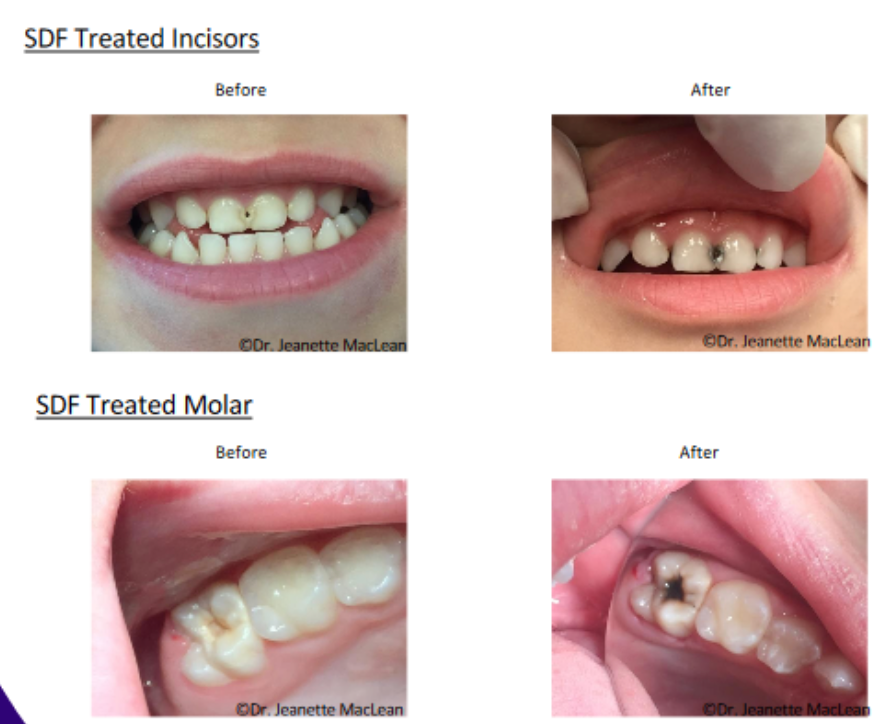
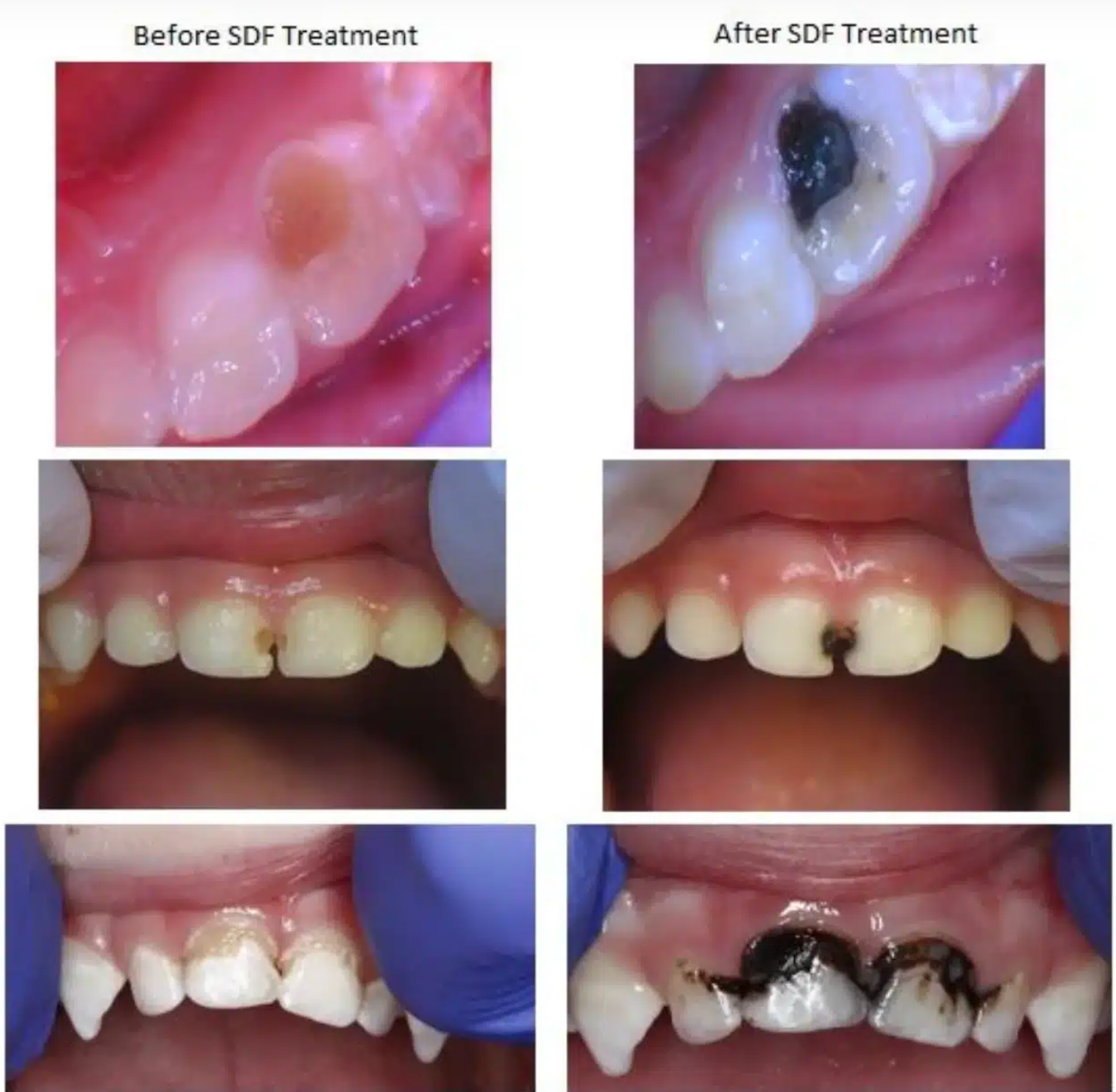
There's one significant trade-off, and we'd rather you know it from the first paragraph than discover it in the mirror: SDF turns the decayed part of the tooth permanently black.
For the right child in the right situation, that trade is well worth making. And not all areas we place it are visible. Here's how to think about it.
How it works
SDF does two jobs at once.
The silver is antimicrobial — it kills the bacteria driving the decay and keeps them from recolonizing. The fluoride helps the remaining tooth structure remineralize and hardens the surface.
The result is that soft, active decay becomes hard, dark, arrested decay. The cavity is still there — the hole doesn't fill itself in — but it stops advancing. Arrested decay doesn't hurt, doesn't spread, and doesn't progress toward the nerve.
Applications are usually repeated. First two applications within 3-4 weeks of each other. After the initial applications, it is applied about twice a year, and we check each treated tooth at every visit - most of the time with new x-rays
About the staining…
This is the part that matters most, so we'll be thorough.
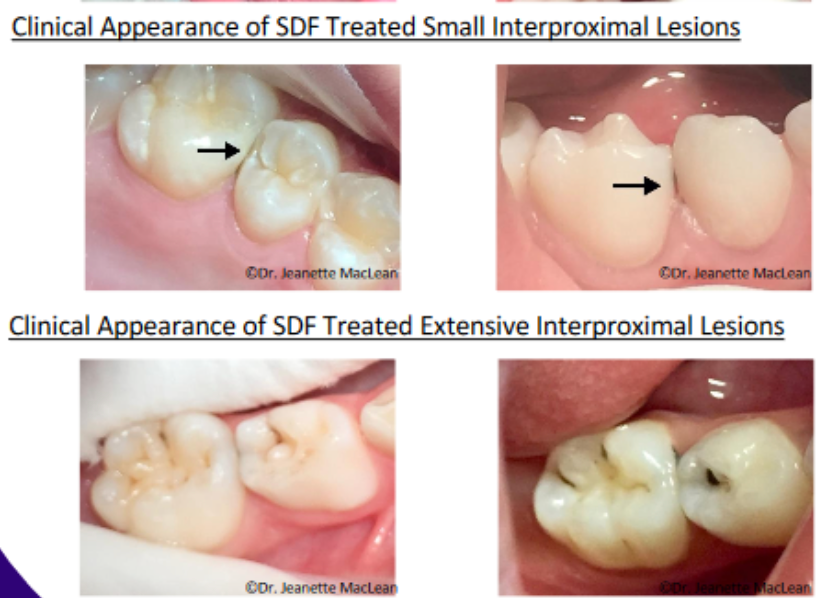
The decayed area turns black — not gray, not brown. Black. It's permanent, and it happens within minutes to days.
Healthy tooth structure isn't stained. The dark area is confined to the decay itself, which is why an arrested cavity often ends up looking like a distinct dark spot rather than a discolored tooth.
It can temporarily mark skin and clothing. A spot on the lip or chin fades over a couple of weeks. Clothing stains don't come out, so we're careful, but old clothes are a sensible precaution.
A stained tooth can be covered later with a filling or crown if you decide you want that, once your child is old enough to manage the treatment.
We'll show you photographs of what treated teeth actually look like before you decide. We ask that both parents see them where possible — the most common complaint about SDF comes from a parent who wasn't in the room and wasn't expecting it.
When SDF is a good choice
Very young children with cavities. A two-year-old with decay may not be able to tolerate a filling, and the alternative may be treatment under general anesthesia. SDF can hold things stable while your child grows.
Children with special healthcare needs for whom conventional treatment is genuinely difficult.
Multiple cavities at once. We can treat many teeth in a single short visit, arrest everything, and then work through proper restorations in a planned order rather than a rush.
Baby teeth close to falling out. If a tooth has a year or so left, arresting the decay may be all it ever needs.
Back teeth where the stain won't show. The cosmetic cost is far lower where nobody sees it.
Cavities that are hard to reach, or a child who can't yet cooperate for conventional treatment.
Buying time. Sometimes the right answer is to stop the decay now and do the definitive treatment in a few months, when your child is more ready, or when it can be combined with other work.
When it isn't the right answer
- Front teeth where appearance matters to your child. A black mark on a visible tooth affects how a child feels about smiling, and that's a real cost, not a vanity.
- Decay that's reached the nerve. If the tooth is already infected or your child is in pain, SDF won't fix it. That needs a pulpotomy or removal.
- A large hole that's trapping food or is at risk of the tooth breaking — that generally needs restoring.
- A known silver allergy, or sores or ulcers in the mouth at the time.
What the appointment is like
- We isolate the tooth and dry it, and protect the gum and lips.
- We brush on a small drop of the liquid and let it absorb for a minute or so.
- We're done. No drilling, no injection, nothing to be numb for.
Some children mention a brief metallic taste. Your child can eat and drink normally afterward.
For a child who's found dentistry hard, this is often the first appointment that goes genuinely well — which has value beyond the tooth itself.
Honest context on the evidence
SDF is well studied for arresting decay, and success rates are good, particularly with repeated applications. It's recommended by the American Academy of Pediatric Dentistry as a legitimate option for managing cavities in children.
Worth knowing: in the US, SDF is cleared for treating tooth sensitivity, and its use for arresting cavities — which is what we're using it for — is what's known as an off-label use. That sounds alarming and isn't. Off-label prescribing is routine, legal, and common throughout medicine and dentistry, and in this case it's a use backed by substantial published evidence and endorsed by the specialty's own academy. We mention it because you deserve the full picture.
Questions parents ask
Does it hurt?
No. There's nothing to numb and nothing to drill. It has a very sour taste.
Does this mean no filling ever?
Sometimes, for a baby tooth that's arrested and near falling out. Often it means "not now." We'll be clear about which we're expecting.
How black is black?
Genuinely black. We'll show you photos before you decide.
Will it work every time?
No. Most treated cavities arrest, some don't, and we re-check at every visit. If a tooth isn't responding we'll tell you and change course.
Is the silver safe?
Yes, in the tiny amounts used. The main precaution is a known silver allergy — tell us if there is one.
Can we take the stain off later?
Not by polishing — it's in the tooth structure. It can be covered with a filling or crown when your child is ready.
Let's decide together
SDF is a genuine trade-off, and it's yours to weigh. We'll tell you honestly what we'd do for our own child's tooth, show you what it will look like, and support whichever way you decide.
Call Bloom Pediatric Dentistry in Chandler: 480-867-7355